
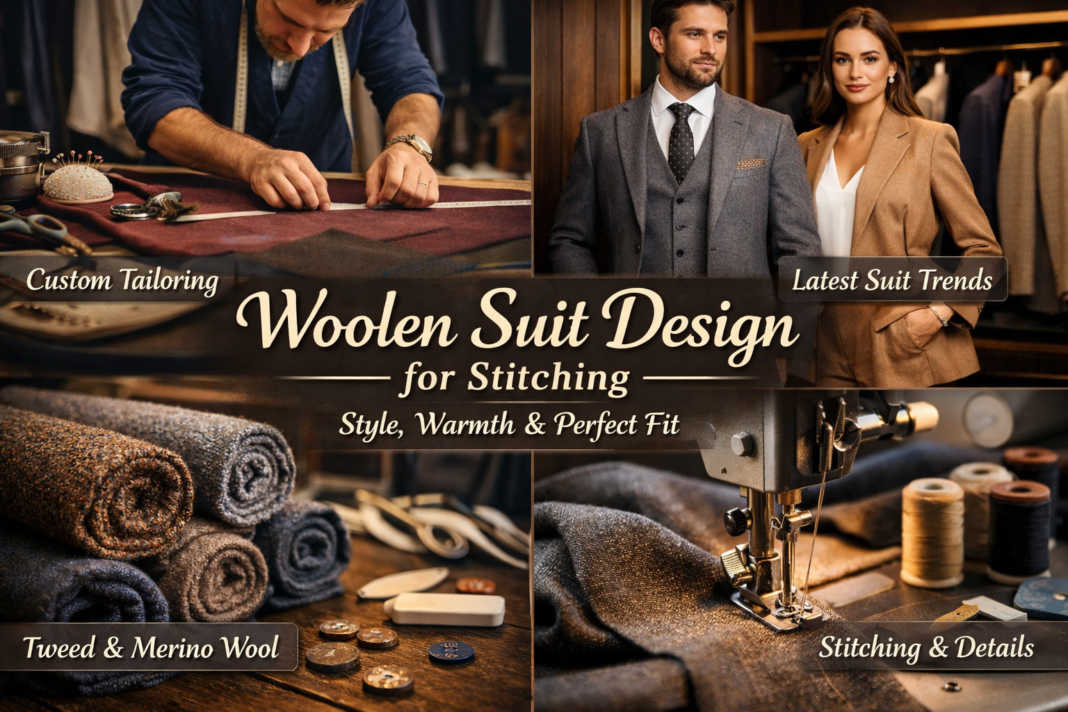

When winter knocks on the door, nothing beats the elegance and warmth of a perfectly stitched woolen suit. Whether you’re dressing for office meetings, weddings, or formal evenings, a woolen suit is like your winter armor—stylish, strong, and timeless. But here’s the catch: the magic truly lies in the design and stitching.
Let’s break it all down in simple words, just like a friendly tailor explaining things over a cup of tea ☕.
Understanding Woolen Suits
What Is a Woolen Suit?
A woolen suit is crafted using wool-based fabric, designed mainly for cold weather. It provides insulation while allowing breathability, making it far superior to synthetic winter fabrics.
Why Wool Is Preferred
Wool naturally regulates temperature, resists wrinkles, and lasts for years. That’s why luxury brands like Hugo Boss and Raymond rely heavily on wool fabrics.
Types of Woolen Fabrics
Merino Wool
Soft, lightweight, and premium—Merino wool is perfect for daily formal wear. It doesn’t itch and drapes beautifully.
Tweed & Flannel
Tweed screams vintage charm, while flannel offers a smooth, cozy finish. Great for blazers and semi-formal suits.
Choosing the Right Wool Fabric
Climate Consideration
Live in extreme winters? Go for heavy wool. Mild winters? Lightweight wool blends work perfectly.
Occasion-Based Selection
Office wear demands subtle textures, while weddings allow bold patterns and richer fabrics.
Latest Woolen Suit Design Trends
Classic vs Modern
Classic suits never die, but modern designs feature slim lapels, shorter jackets, and tapered pants.
Seasonal Trends
Earth tones, charcoal grey, and navy blue dominate winter fashion year after year.
Woolen Suit Styles for Men
Two-Piece Suits
Jacket + trousers—simple, elegant, and versatile.
Three-Piece Suits
Add a waistcoat, and boom—you’ve entered gentleman territory.
Woolen Suit Styles for Women
Skirt Suits
Professional yet stylish—perfect for corporate winters.
Pant Suits
Modern, powerful, and incredibly comfortable.
Measurements for Perfect Stitching
Body Measurements
Chest, shoulder, sleeve length, waist—precision is everything.
Common Fitting Mistakes
Too tight? You’ll suffocate. Too loose? You’ll look borrowed. Balance is the key.
Custom vs Readymade Woolen Suits
Benefits of Custom Stitching
Custom suits fit like a second skin. You control fabric, design, buttons—everything.
Cost Comparison
Readymade is cheaper, but custom stitching offers long-term value.
Stitching Patterns & Cuts
Slim Fit
Sharp, modern, and stylish—ideal for lean body types.
Regular & Comfort Fit
Classic comfort without compromising elegance.
Color Selection in Woolen Suits
Formal Colors
Black, navy blue, charcoal grey—safe and sophisticated.
Fashion Colors
Olive green, wine, checks—perfect for weddings and parties.
Accessories with Woolen Suits
Buttons & Linings
Horn buttons and silk linings add luxury without shouting.
Pocket Styles
Flap pockets for formal wear, patch pockets for casual elegance.
Care & Maintenance
Washing Tips
Dry clean only. Water is wool’s worst enemy.
Storage Tips
Use padded hangers and moth repellents.
Woolen Suits for Different Occasions
Office Wear
Minimal designs, solid colors, classic cuts.
Wedding & Party Wear
Experiment with textures, patterns, and accessories.
Cost of Stitching Woolen Suits
Fabric Cost
Ranges from affordable blends to premium imported wool.
Tailoring Charges
Good tailoring isn’t cheap—and cheap tailoring isn’t good 😉
Future of Woolen Suit Designs
Sustainable Wool
Eco-friendly wool is the future. Brands like Patagonia are leading the way.
Tech in Tailoring
3D body scanning and AI-based fitting are redefining tailoring.
Conclusion
A well-designed woolen suit is not just clothing—it’s an experience. From fabric selection to final stitching, every detail matters. Whether you’re investing in your first custom suit or upgrading your winter wardrobe, understanding woolen suit design helps you make smarter, more stylish choices.
FAQs
Q1. Which wool fabric is best for stitching suits?
Merino wool is considered the best for comfort and durability.
Q2. How much fabric is needed for a woolen suit?
On average, 3 to 3.5 meters for a two-piece suit.
Q3. Are woolen suits suitable for daily office wear?
Yes, lightweight wool is perfect for daily formal use.
Q4. How long does custom stitching take?
Usually 7–15 days, depending on tailor workload.
Q5. Can woolen suits be altered later?
Yes, but always leave margin fabric during stitching.